Particle Image Velocimetry (PIV)

Microvec Time Resolved PIV

by Microvec

Microvec
Microvec Time Resolved PIV

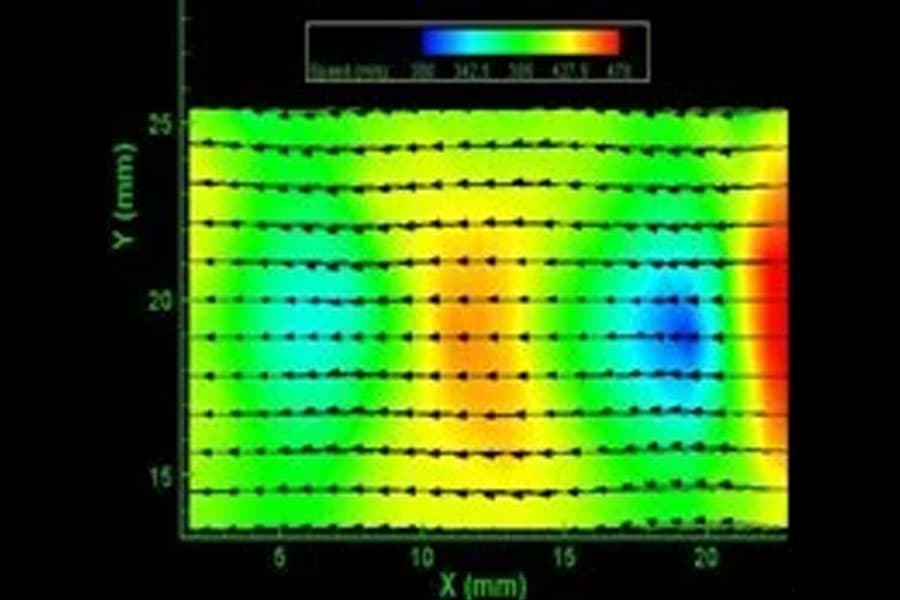
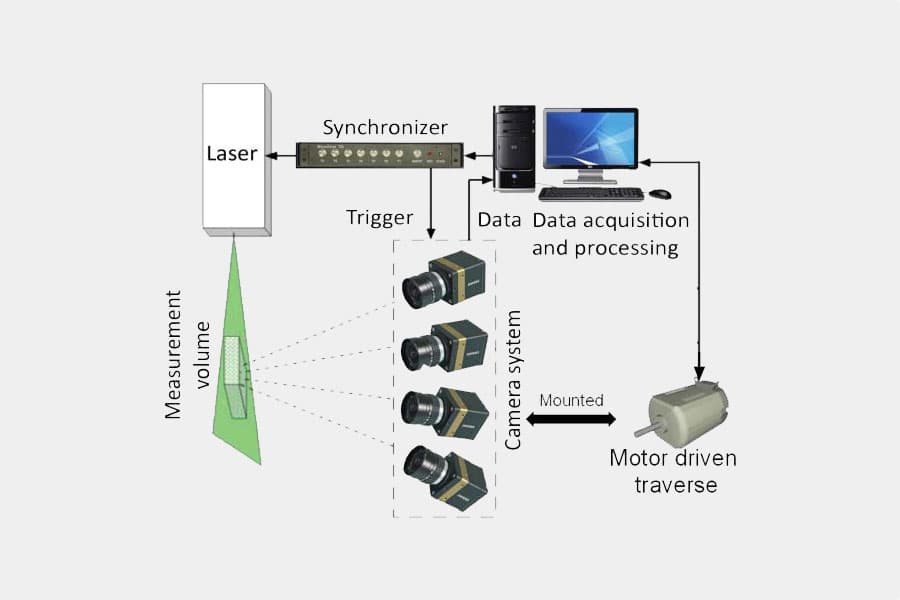
Time Resolved PIV (TR PIV) technique includes capturing frames at a high speed of hundreds or thousands of frames per second usually with high-speed cameras. Images are recorded at a series of time intervals and are subsequently processed to extract velocity information based on the time between the frames.

Technical Specifications

ParameterTypical Range
ParameterValue
Camera Options1.3MP up to 16,000 fps
Camera Options (2)5MP up to 4,500 fps
Camera Options (3)8MP up to 2,000 fps
Camera Options (4)21MP up to 1,000 fps
Laser (Pulsed PIV)15/20/30/50/100 mJ, 1,000 Hz or 10,000 Hz per channel
Laser (DPSS/Continuous)1W / 2W / 5W / 10W
Synchronizer8, 16, or 24 channel, TTL control, 0.25ns jitter, USB control

Key Specifications

  • High-speed camera options: 1.3MP (up to 16,000 fps), 5MP (up to 4,500 fps), 8MP (up to 2,000 fps), 21MP (up to 1,000 fps)
  • High-frequency double-pulse PIV lasers: 15, 20, 30, 50, or 100 mJ at 1,000 Hz or 10,000 Hz per channel, for flows above 1 m/s
  • DPSS continuous lasers: 1W, 2W, 5W, or 10W, for flows below 1 m/s
  • Synchronizer with 8, 16, or 24 channels, TTL control, 0.25ns jitter, USB control

Key Features

  • Two system configurations: high-speed camera + DPSS laser (low-speed flows) or high-speed camera + high-frequency PIV laser (high-speed flows)
  • Scalable camera resolution/frame-rate tradeoff to match application
  • Precision synchronization for accurate time-resolved velocity measurement

Applications

  • Time-resolved velocity field measurement
  • Turbulence and unsteady flow research
  • High-speed fluid dynamics studies
2D PIV

Microvec

Particle Image Velocimetry (PIV)

2D PIV

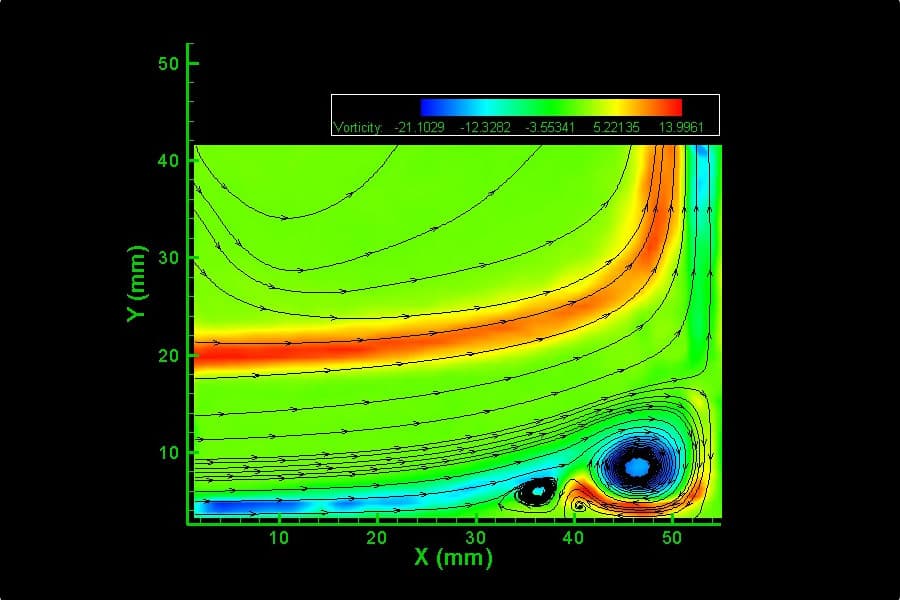
Advanced integrated hardware and software system for the most demanding experimental fluid dynamics situations. Used from micrometers to 1 meter testing field or few mm/sec to 7Mach speeds as well as ability to observe flow in flames.

View Details
AI PIV

Microvec

Particle Image Velocimetry (PIV)

AI PIV

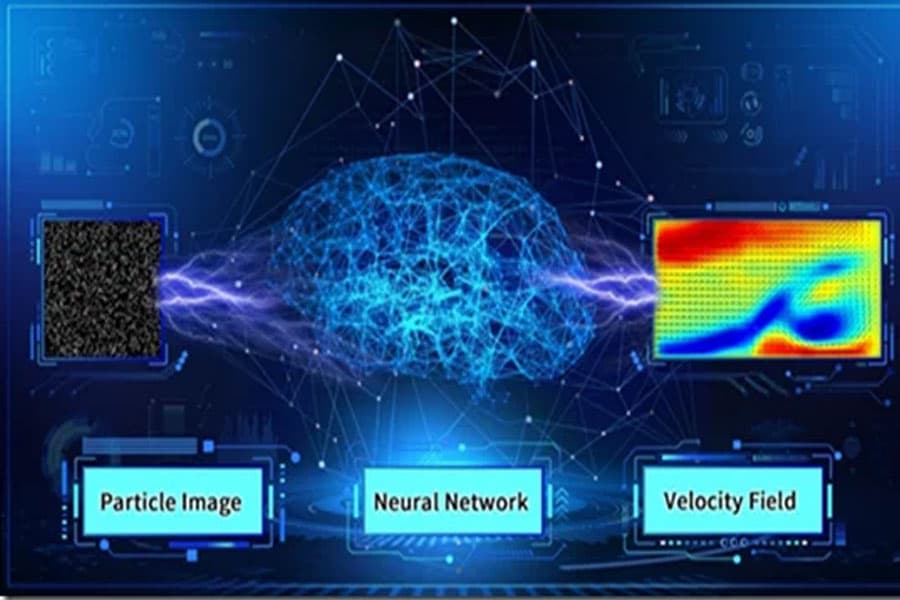
Artificial Intelligence (AI) PIV is the newest unique innovation from Microvec. With the advances of artificial intelligence and ever wider adoption of deep learning techniques based on Convolutional Neural Network (CNN), common in the computer and machine vision worlds in recent years, PIV methodology based on deep learning has turned out to be very accurate. Microvec’ AI PIV is based on the optical flow neural network which has already proven itself in the computer vision community. It has been successfully applied to fluid mechanics and particle image velocimetry, where global and quantitative velocity field from images can be extracted with improved computational efficiency without reduction of accuracy.

View Details
3D PIV

Microvec

Particle Image Velocimetry (PIV)

3D PIV

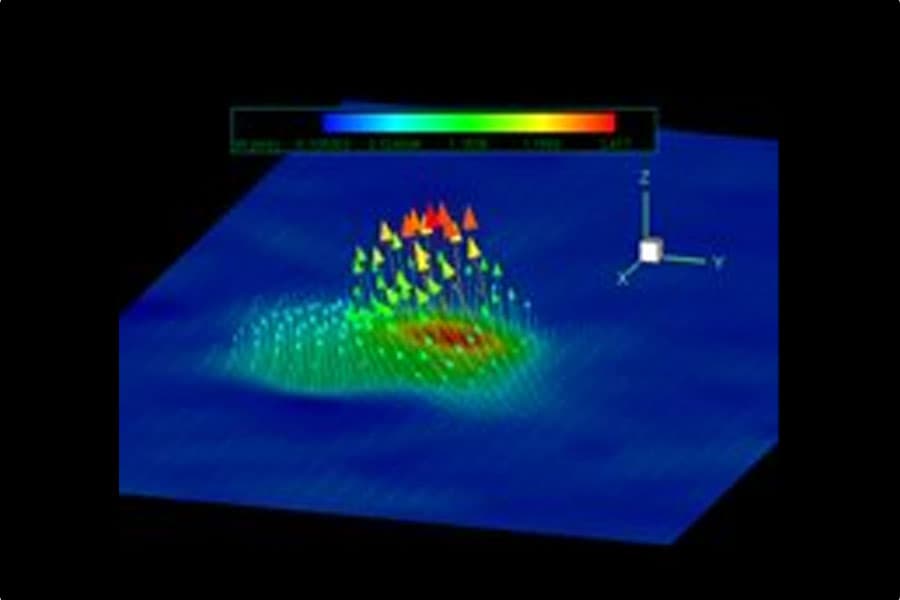
3D PIV system is based on the original 2D PIV system but uses the principle of stereoscopic imaging to add the third dimension. At least two sets of cameras view the test area from different angles and with the two sets of two-dimensional velocity vector components a third velocity vector component can be calculated within the test area. The image is first calibrated, and afterward this third velocity component can be evaluated.

View Details
Tomo PIV

Microvec

Particle Image Velocimetry (PIV)

Tomo PIV

3D PIV system is based on the original 2D PIV system but uses the principle of stereoscopic imaging to add the third dimension. At least two sets of cameras view the test area from different angles and with the two sets of two-dimensional velocity vector components a third velocity vector component can be calculated within the test area. The image is first calibrated, and afterward this third velocity component can be evaluated. Microvec has been developing proprietary PIV technology and has been constantly improving and implementing new techniques and algorithms based on the latest research in the field since 2002. It has a history of constantly introducing new and innovative techniques and algorithms such as Pressure PIV in 2014 or Light Field PIV in 2017.

View Details