In brief
A CMOS (complementary metal-oxide-semiconductor) image sensor gives every pixel its own photodiode and amplifier and puts analog-to-digital conversion on the same chip. That design uses less power, reads out faster and costs less to build than a CCD, which is why almost every modern high-speed and scientific camera uses CMOS.

CMOS (complementary metal-oxide-semiconductor) sensors are an integral part of modern imaging technology, used in digital cameras, smartphones, surveillance systems, medical equipment and industrial imaging. They are electronic chips that detect light and convert it into images. Their advantages over older technologies such as CCDs (charge-coupled devices) matter most where size, weight, power efficiency and speed are critical.
How CMOS sensors work
A CMOS sensor is a grid of pixels. Each pixel contains a photodiode that detects light and converts it into an electrical signal, and transistors that amplify and transfer that signal. The conversion from analog to digital happens on the chip itself. Integrating amplifiers, analog-to-digital converters (ADCs) and processing on the same die is the defining feature of CMOS sensors, and the source of most of their advantages.
Energy efficiency
CMOS sensors use far less power than CCDs, which need a high voltage to shift charge across the chip. That makes them well suited to battery-powered devices, and to any system where heat and power draw matter, such as portable or remote monitoring cameras.
Speed and performance
Readout speed is where CMOS sensors stand out. A CCD shifts every pixel's charge out through a small number of output nodes, while a CMOS sensor can read rows, columns or regions in parallel. Parallel readout is what makes high frame rates possible, and it is the reason high-speed cameras are built on CMOS. Fast readout also reduces motion artifacts when imaging fast-moving objects.
Integration
Because ADCs, noise-reduction circuits and other signal processing sit on the same chip, a CMOS camera needs fewer external components. That makes the camera more compact and less expensive to build. CMOS sensors are also made on standard semiconductor production lines, which lowers cost further at volume.
Image quality has caught up
CCDs were once known for better image quality and low-light performance. Advances in CMOS design have closed most of that gap. Backside-illuminated (BSI) sensors move the wiring behind the photodiode so more light reaches it, and scientific CMOS (sCMOS) sensors combine low read noise with high dynamic range.
CMOS in high-speed and scientific cameras
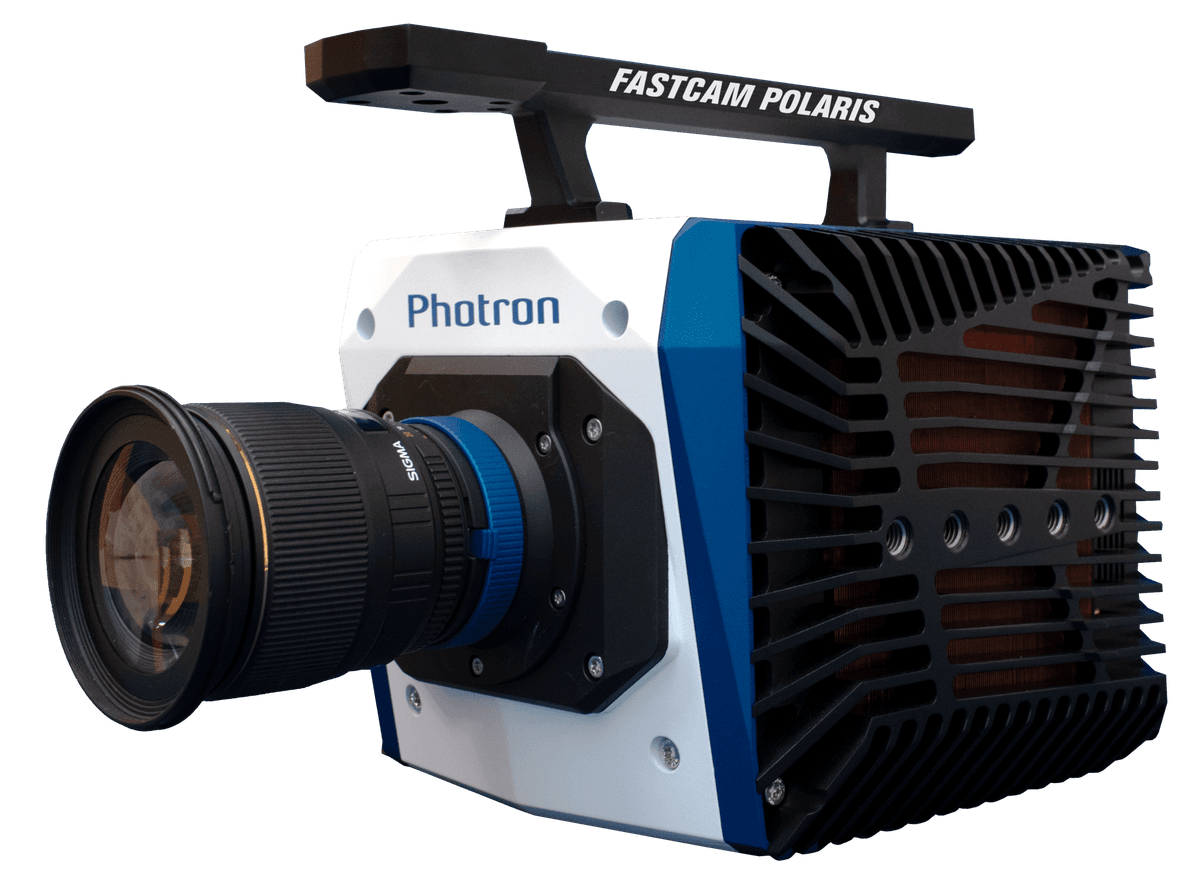
Today's high-speed and scientific cameras show how far the technology has come. Photron's upcoming FASTCAM Polaris F5 uses a 12-bit BSI CMOS sensor to record 4K images at 5,000 fps, and PCO's pco.edge family uses sCMOS sensors for low-light scientific imaging. See all high-speed cameras and scientific cameras available in Canada through HSI.
Conclusion
CMOS sensors changed the imaging industry by combining efficiency, speed, integration and low cost. CCDs still appear in some specialised and legacy systems, but CMOS has become the standard for most modern imaging, and continued development keeps raising what each frame can capture.
Frequently asked questions
What is a CMOS image sensor?
A CMOS image sensor is a chip made of light-sensitive pixels, where each pixel has its own photodiode and amplifier and the analog-to-digital conversion happens on the same chip. It converts light into a digital image.
Is CMOS better than CCD?
For most applications, yes. CMOS sensors use less power, read out much faster and cost less to build. Modern backside-illuminated and scientific CMOS sensors have also closed most of the low-light image-quality gap that CCDs once held.
Why do high-speed cameras use CMOS sensors?
CMOS sensors can read many pixels in parallel instead of shifting charge through a few output nodes like a CCD. That parallel readout is what allows thousands to millions of frames per second.
Chris Keay
Vice President, Sales – North America, High Speed Imaging Inc.
Chris works with research labs, test facilities and manufacturers across North America to specify high-speed camera, lighting and analysis systems for their applications.