In brief
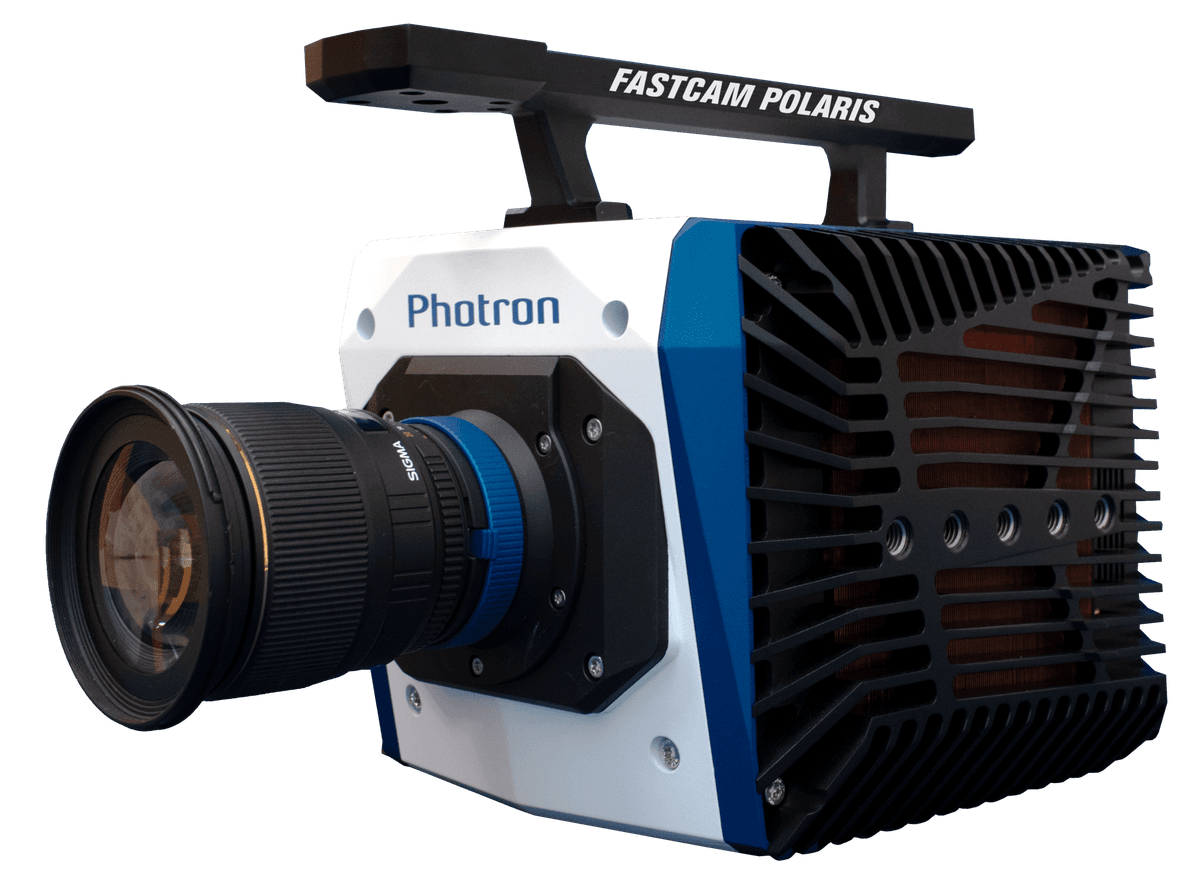
High-speed cameras record production-line events at thousands of frames per second, so engineers can replay a jam, a cracked part or a failed seal in slow motion and find its cause in one review session instead of days of guesswork. Paired with pulsed LED or laser lighting, they are used for defect detection, root-cause analysis of downtime and tuning stamping, forming and moulding processes.
Vision systems on the production line
Modern manufacturing demands near-zero defects and maximum throughput. High-speed imaging has moved from a specialised research tool to an essential part of industrial quality assurance, used to inspect parts, monitor welds and catch anomalies at speeds the eye cannot follow.
What high-speed cameras bring to manufacturing
Automotive, electronics and aerospace production lines routinely run at hundreds of parts per minute. Cameras recording thousands of frames per second let engineers capture the exact moment a defect happens, whether it is a micro-crack forming during stamping, a flaw in a solder joint or a seal failing under pressure. That visibility turns reactive troubleshooting into proactive process control.
Reducing downtime with slow-motion analysis
Unplanned downtime is one of the most expensive problems in high-volume manufacturing. When a machine fails or produces out-of-spec parts, engineers can spend hours looking for the cause. A high-speed camera placed at the critical point records the failure in slow motion, so the team can see the cause, such as a mis-timed actuator, a worn bearing or an inconsistent feed rate, and fix it quickly. Problems that took days of guesswork can often be solved in a single review session.
Lighting matters as much as the camera
Short exposures at high frame rates need far more light than standard industrial cameras. Pulsed LED and laser illumination from manufacturers such as Cavitar and GS Vitec is built for this. Synchronising each light pulse with the camera's exposure delivers intense, controlled light without heating the scene, giving clear images even in harsh production environments. See all lighting and laser illumination.
From inspection to process optimisation
High-speed imaging is increasingly used to tune process parameters, not just catch defects. In stamping and forming, slow-motion video of metal flow during a press stroke shows where material is over-stressed, so tooling can be adjusted to extend die life and improve consistency. In injection moulding, imaging the gate and flow front can reveal short shots and weld-line placement before they become recurring problems. In welding, dedicated welding cameras see through the arc glare to show the melt pool.
Canadian manufacturers and HSI
HSI works with manufacturing facilities across Canada to specify, deploy and support high-speed imaging systems for each application. Whether you need a portable system for line-side diagnostics or a permanent installation for continuous monitoring, we can match the camera, lens and lighting to your production environment. See process monitoring and inspection or talk to our team.
Frequently asked questions
How are high-speed cameras used in manufacturing?
Manufacturers use high-speed cameras to catch defects as they happen, diagnose machine jams and failures in slow motion, and tune processes such as stamping, forming, injection moulding and welding.
What frame rate do I need for production line analysis?
It depends on how fast the event moves. A useful rule is to pick a frame rate at which the part or mechanism moves only a few pixels between frames. Many line-side diagnostics work at 1,000 to 10,000 fps, and very fast mechanisms or fractures need more. HSI can help size the camera for your line.
Do high-speed cameras need special lighting?
Usually, yes. Short exposures at high frame rates collect very little light, so pulsed LED or laser illumination synchronised to the camera is often needed for sharp, bright images.
Chris Keay
Vice President, Sales – North America, High Speed Imaging Inc.
Chris works with research labs, test facilities and manufacturers across North America to specify high-speed camera, lighting and analysis systems for their applications.