Particle Image Velocimetry
Fluid flow visualization and measurement techniques
In brief
Particle image velocimetry (PIV) measures the velocity of a flow across a whole plane or volume at once. Tracer particles are lit by a pulsed laser sheet, a camera records two closely timed frames, and correlation software turns particle motion into velocity vectors.
Overview
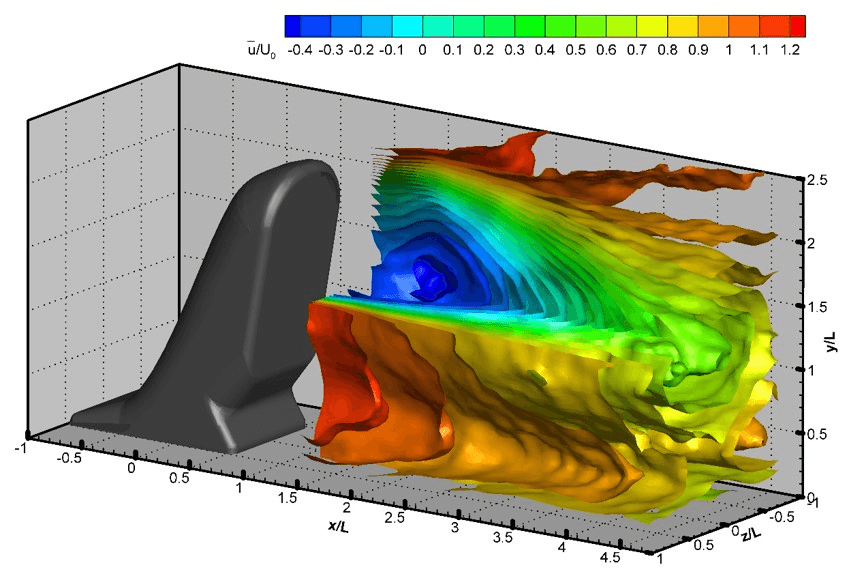
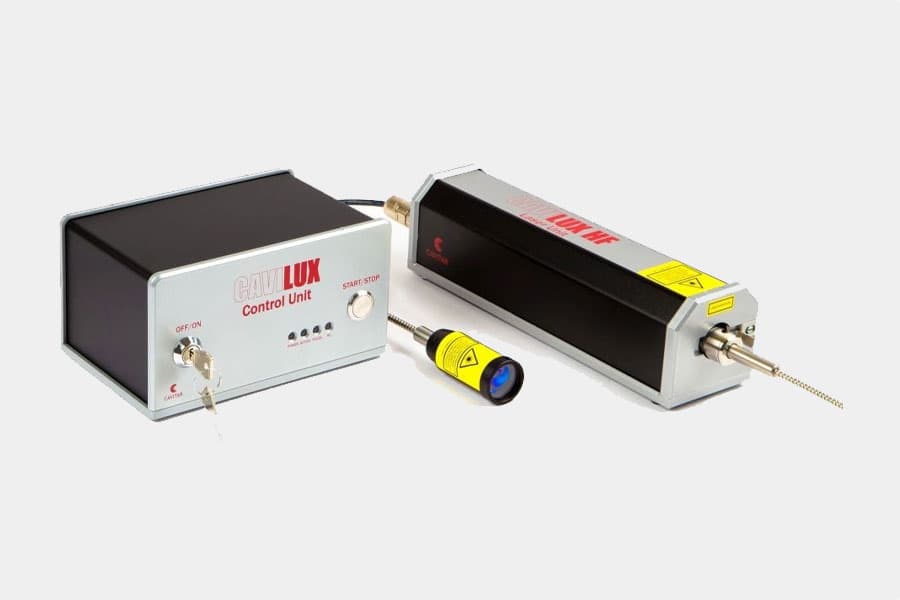
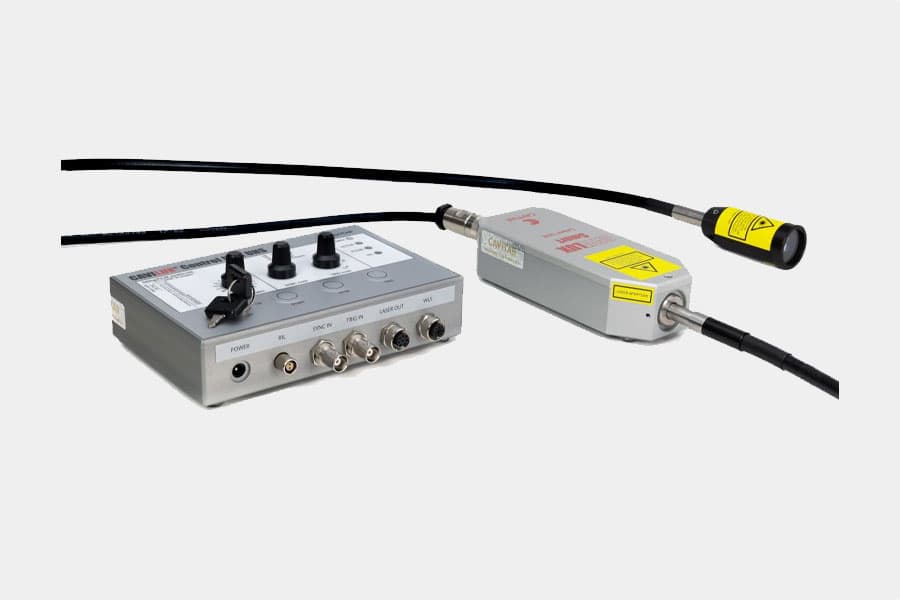
Particle Image Velocimetry (PIV) is a non-intrusive optical measurement technique used to capture instantaneous velocity fields across an entire plane of a fluid flow. A laser illuminates tracer particles seeded into the flow, and a high-speed camera records successive frames. Cross-correlation algorithms then compute displacement vectors for each interrogation window, producing a full two-dimensional or three-dimensional velocity map in a single measurement. This whole-field capability distinguishes PIV from point-measurement methods such as hot-wire anemometry or laser Doppler velocimetry. HSI Inc. supplies complete PIV systems from Microvec, including synchronized pulsed lasers, calibration targets, and analysis software, along with Cavitar laser illumination for highly reflective or opaque flow environments.
How high-speed imaging is used
- Aerodynamics: Flow around wings, vehicles and blades in wind tunnels.
- Combustion and sprays: Flow fields in burners, engines and fuel sprays.
- Water and biomedical flows: Water channels, pumps, heart valves and blood-flow models.
- Turbulence research: Time-resolved PIV for how turbulent structures evolve.
What to look for
Decide between 2D, stereo (three velocity components) and tomographic (volume) PIV, then match the laser energy, camera resolution and frame rate to the flow speed and field of view. Time-resolved PIV needs high-speed cameras and high-repetition lasers.
Frequently asked questions
What is the difference between 2D and 3D PIV?
2D PIV measures two velocity components in a plane with one camera. Stereo PIV adds the out-of-plane component with two cameras, and tomographic PIV reconstructs all three components through a volume with several cameras.
What is time-resolved PIV?
Time-resolved PIV records at high frame rates with high-speed cameras and lasers, so it follows how the flow changes over time instead of giving separate snapshots.
Where can I buy equipment for particle image velocimetry in Canada?
HSI Inc. (High Speed Imaging Inc.) is the authorized Canadian distributor for Microvec, and can recommend a complete setup for particle image velocimetry. Request a quote at hsi.ca/contact or call +1-905-649-5445.
Recommended for This Application

Microvec
2D PIV

Microvec
AI PIV

Microvec
3D PIV

Microvec
Tomo PIV

Microvec
Time Resolved PIV
Also Relevant





Need a solution for Particle Image Velocimetry?
Our team matches your application to the exact camera, lens, and software stack it needs.